Case study · Struxo
An AI that quotes with the builder, not for them
Struxo Quotes helps residential builders turn construction plans and project details into structured quote drafts. It streamlines the most time-consuming part of the construction workflow while keeping builders in control of the final result.
Context
The first builder to reply usually wins the job
Quoting is the slowest part of a residential builder's week: reading plans, retyping scope into spreadsheets, chasing trade prices, checking insurance and deposit rules. While the quote sits half-finished, the lead goes cold and another builder replies first.
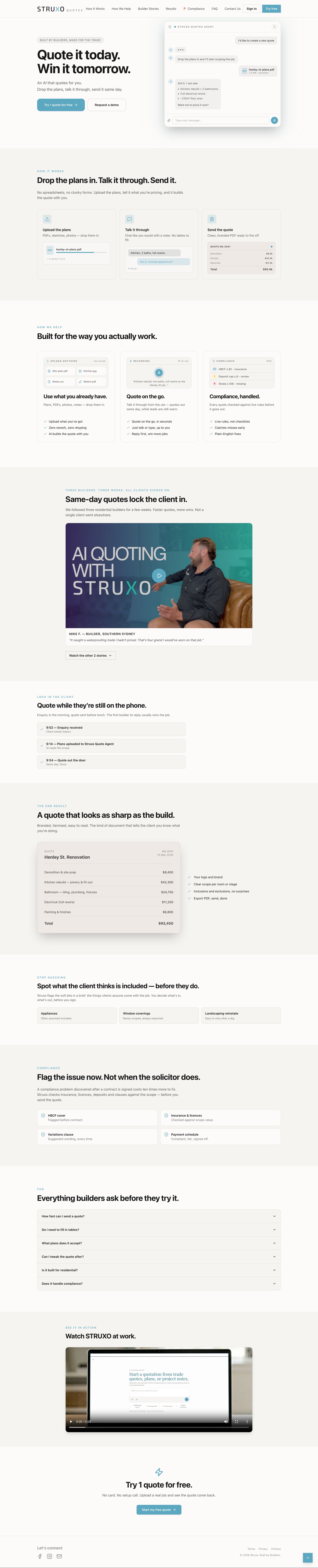
Struxo Quotes compresses that into a conversation. A builder drops the plans in (PDFs, sketches, photos), talks the job through like they would with a mate, and sends a clean, branded, itemised quote the same day: enquiry at 9:02, plans uploaded at 9:14, quote out the door at 9:54.
The design challenge: make AI feel like a sharp estimator sitting next to the builder, never a black box quoting over their head.
The workflow
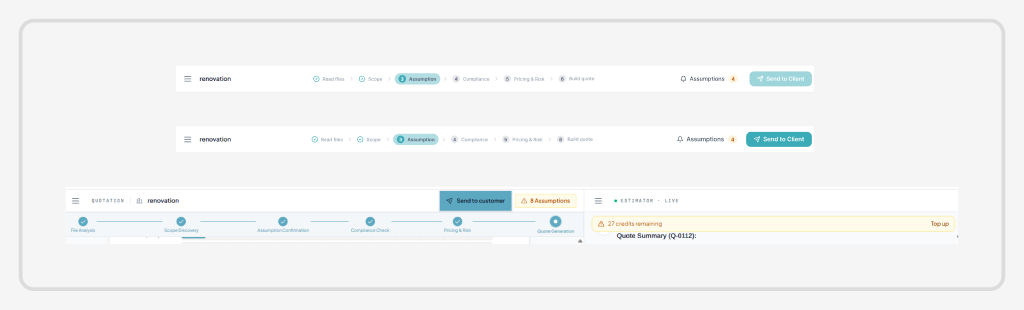
Six steps the builder can always see
Under the chat sits a structured agent pipeline: Read files → Scope → Assumptions → Compliance → Pricing & Risk → Build quote. I designed the header as a live progress map of that pipeline, so the builder always knows where the quote stands and what is still needed.
- Assumptions as a first-class object. The agent flags the soft spots in a brief (appliances, window coverings, landscaping reinstatement) that clients assume are included. The builder decides what's in and what's out before signing.
- Compliance before the solicitor. Every quote is checked against live state rules: HBCF insurance, deposit caps, strata requirements, with plain-English fixes instead of legalese.
- Honest AI. A permanent disclaimer ("Struxo Quotes may make mistakes, always verify totals") and per-step confirmation keep the human signature on every number.
UX writing
Builders say quote, not quotation
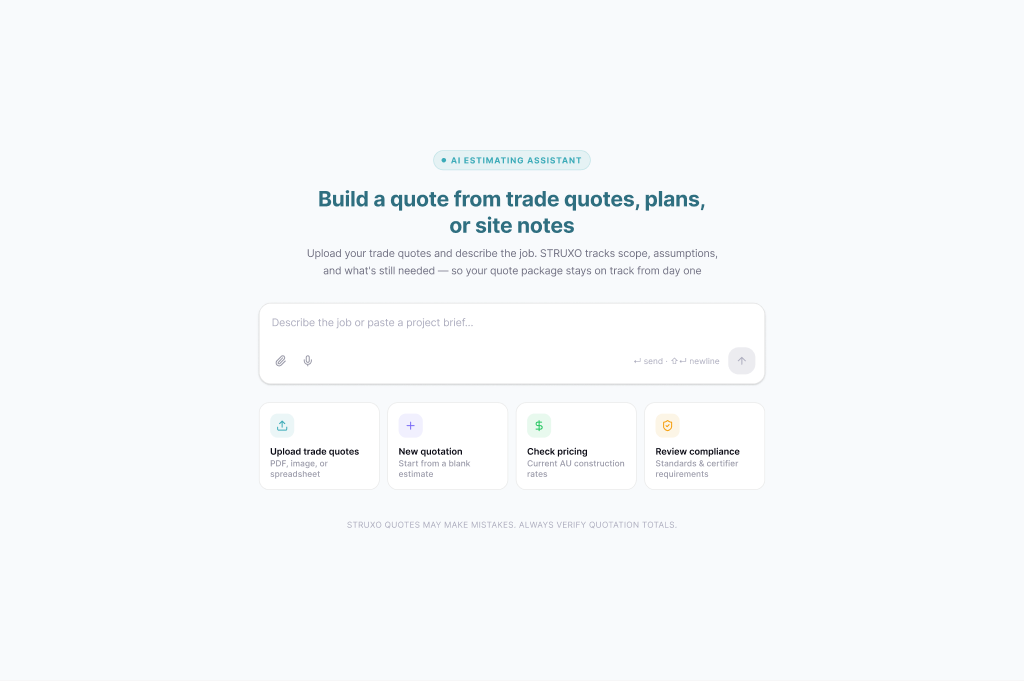
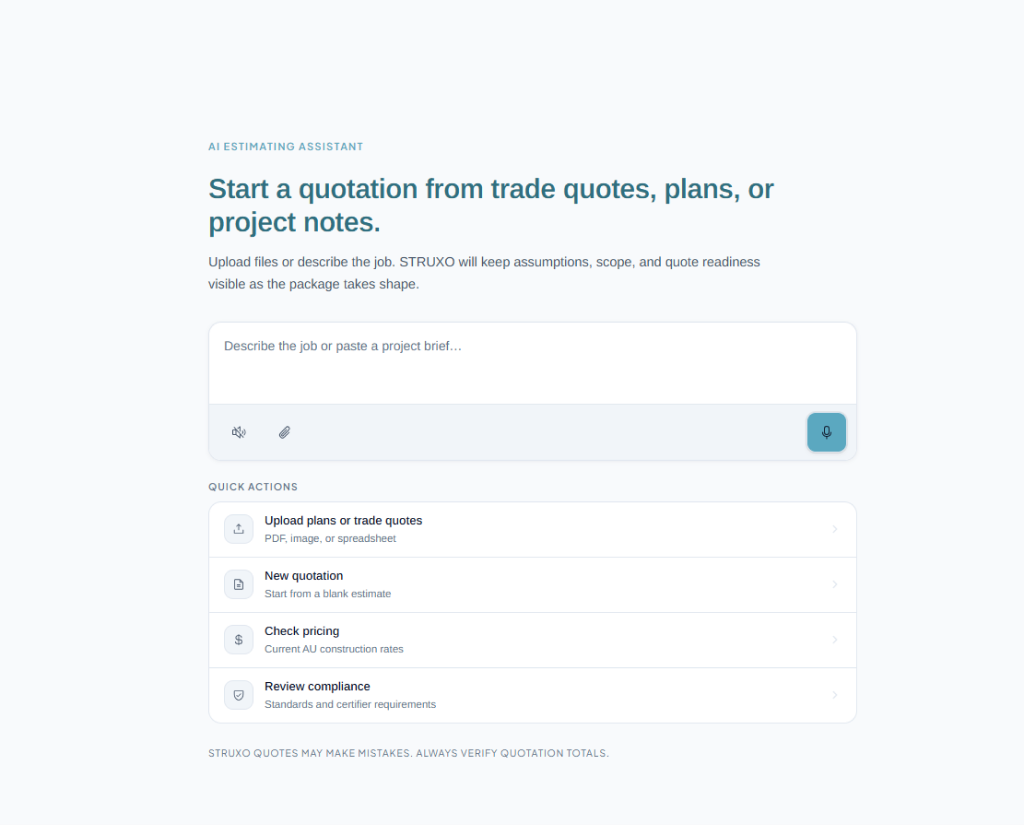
The fastest usability wins came from language, not layout. I rewrote the empty state word by word against how builders actually speak:
- "Start a quotation" → "Build a quote." Builders say quote, not quotation, and build feels active and familiar.
- "Quote readiness" → "what's still needed." Readiness is product jargon; builders want to know what's missing.
- "As the package takes shape" → "comes together." Simpler, more natural phrasing.
- "Describe the job" stayed. Clear and direct for the audience; not everything needs changing.
The same pass reshaped the quick actions from a plain list into scannable cards, so the four ways to start a quote read at a glance.
Iterating on the live app
Small screens of friction, removed weekly
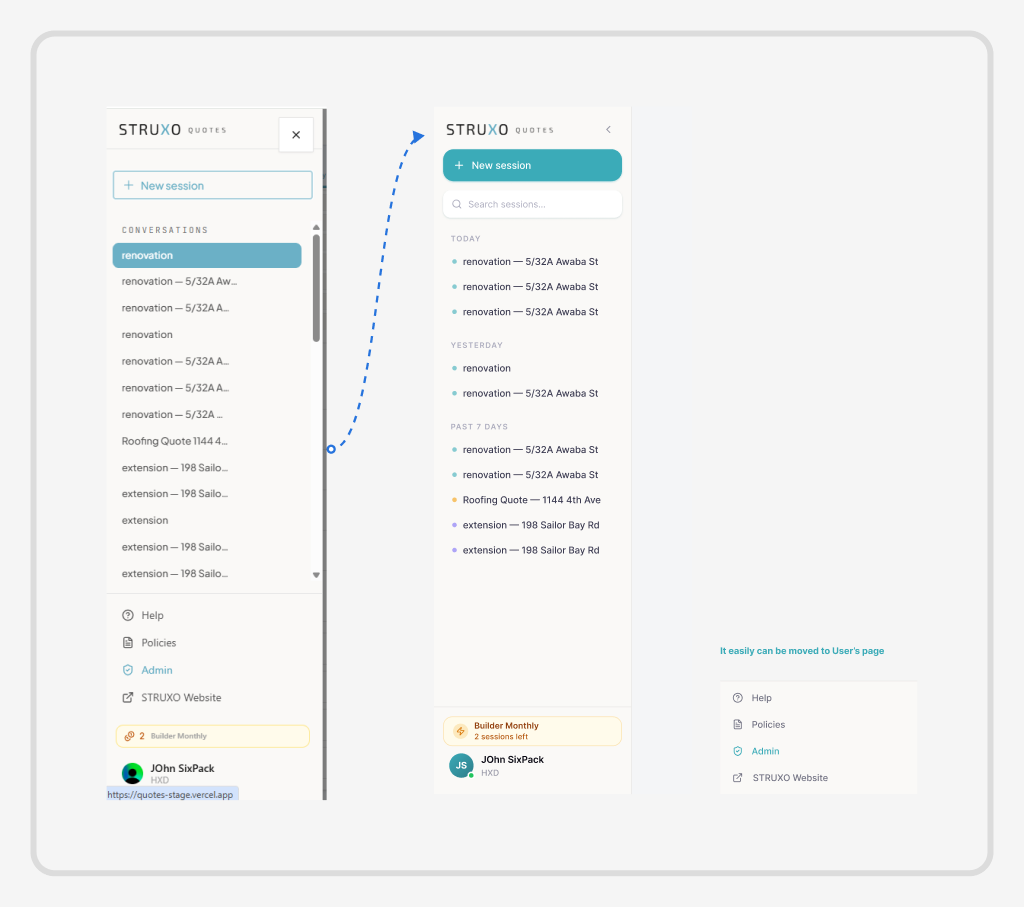
The product ships continuously, so the design work runs as annotated before-and-after passes on the live build: session history grouped by day with status dots, a collapsible sidebar that stays usable at both widths, plan-aware footers, and utility links relocated to the user page where they belong.
Each pass is documented in Figma with the reasoning next to the screens, so engineers ship from the file without a handoff meeting.
Results
Same-day quotes, clients locked in
Pilot figures from Struxo's launch programme with three residential builders in Sydney.
In the wild
Quote it today. Win it tomorrow.
The product speaks the same language on the outside: the landing page walks a builder from "drop the plans in" to a branded quote, with the agent chat, compliance checks and builder stories doing the convincing. See it live at quotes.struxo.com ↗.