Case study · Cognizant
Designing ServiceNow experiences for APAC enterprises
End-to-end experience design across CSM and Employee Center implementations: mining, retail, healthcare, energy, government and finance, serving 170,000+ end users on one platform.
Featured capability
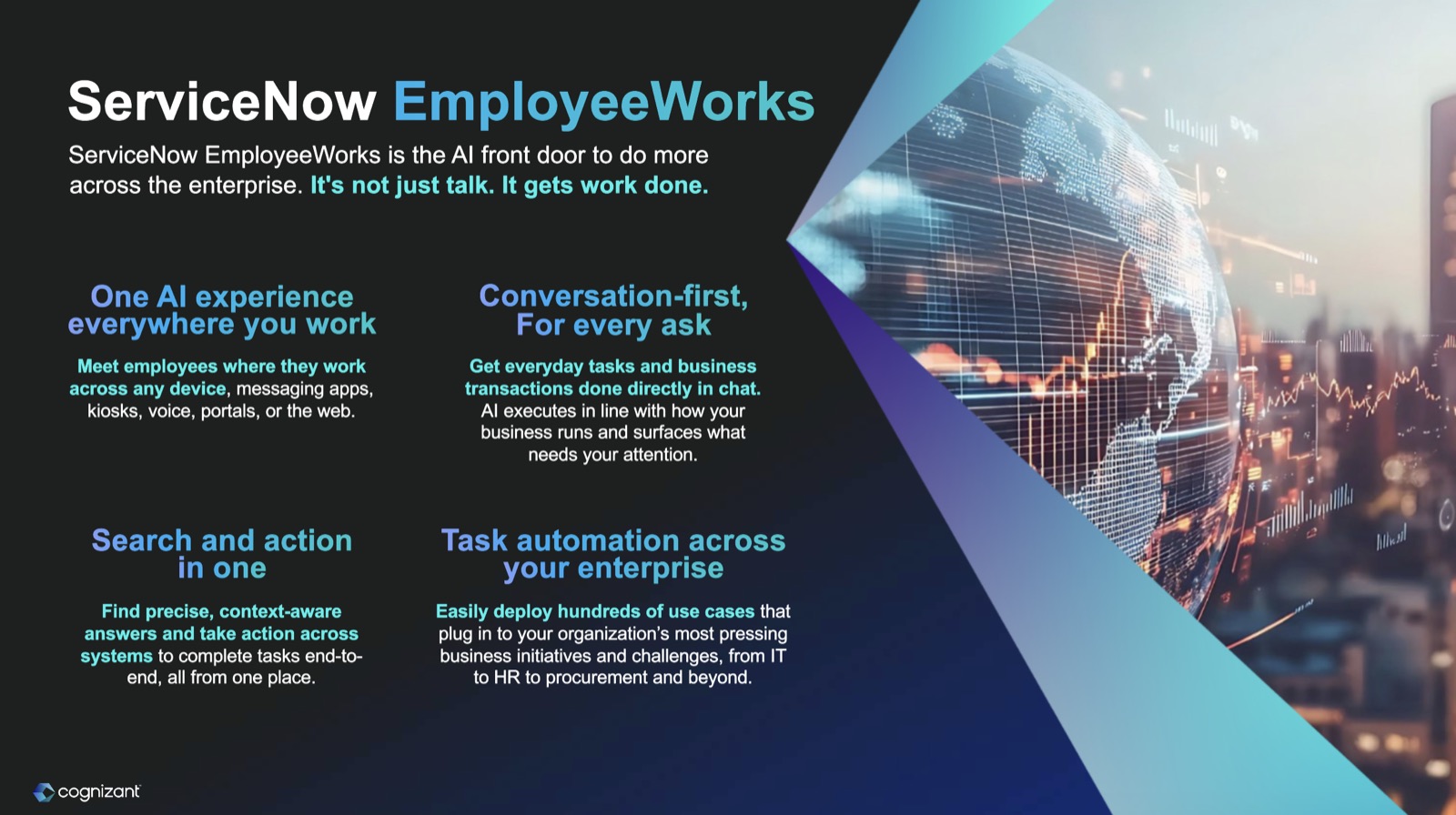
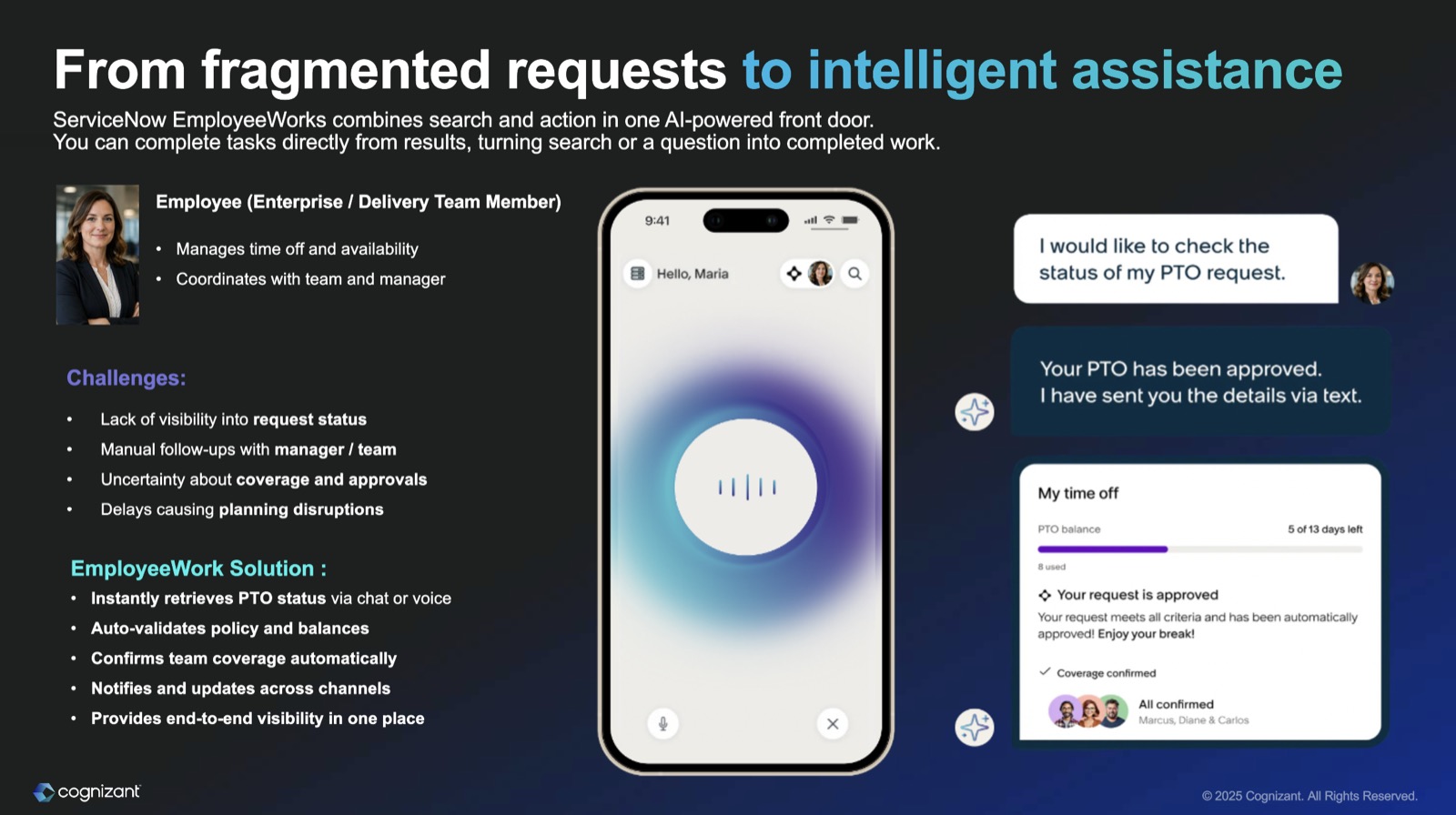
ServiceNow EmployeeWorks: an AI front door for daily work
EmployeeWorks is the conversational layer I design on top of the portals: one AI experience across devices, chat-first, that turns a question into completed work instead of another form.
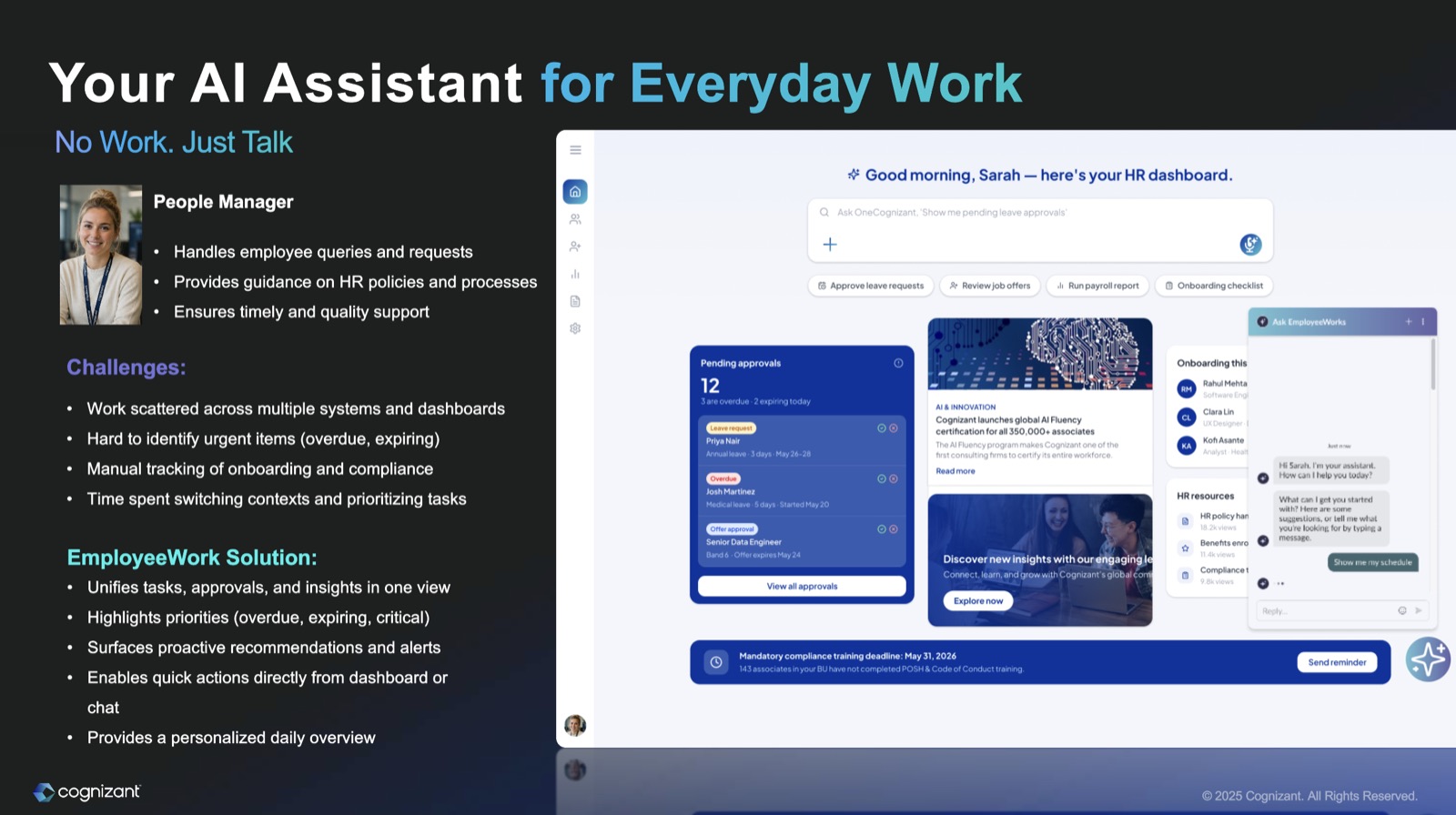
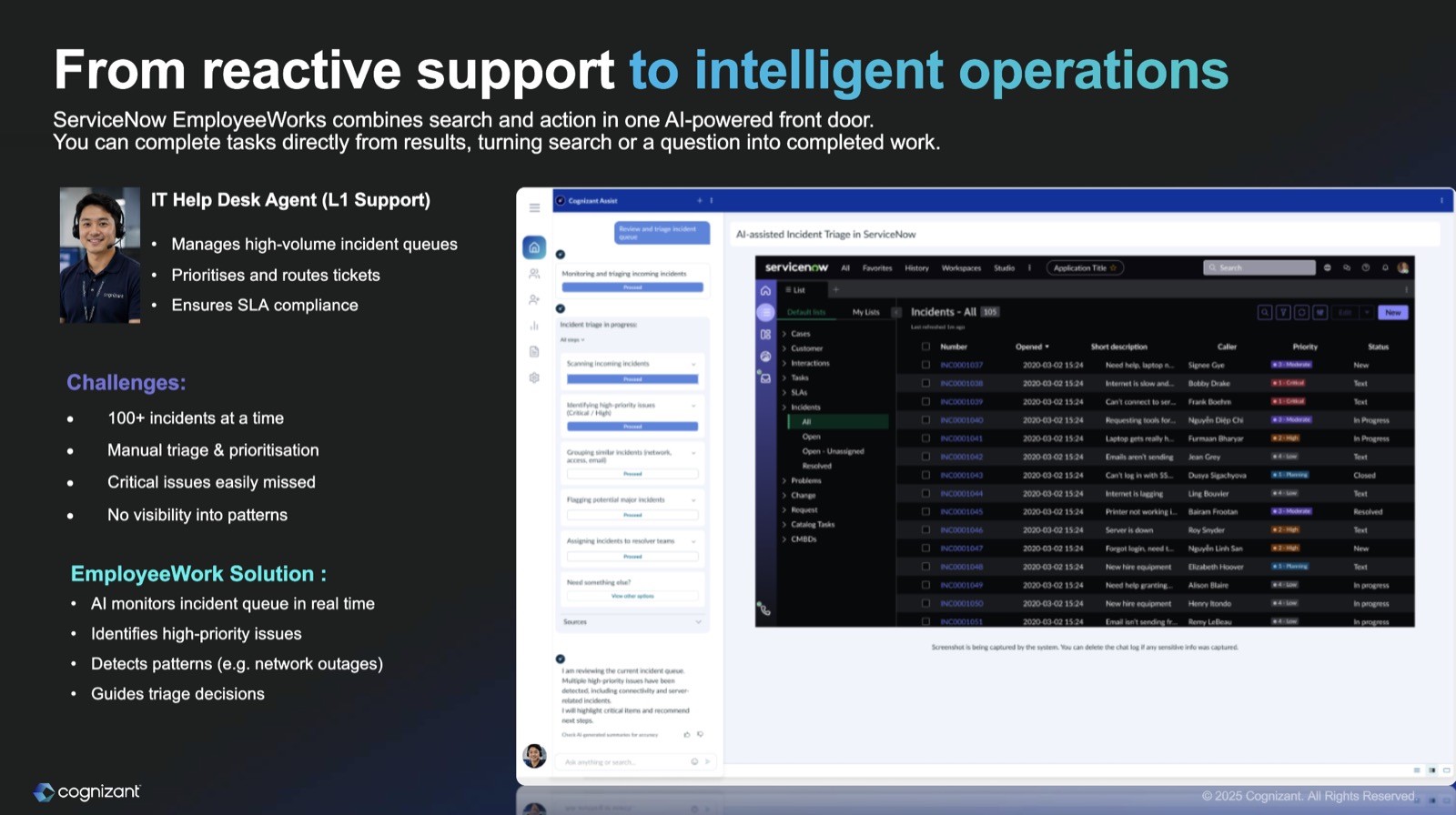
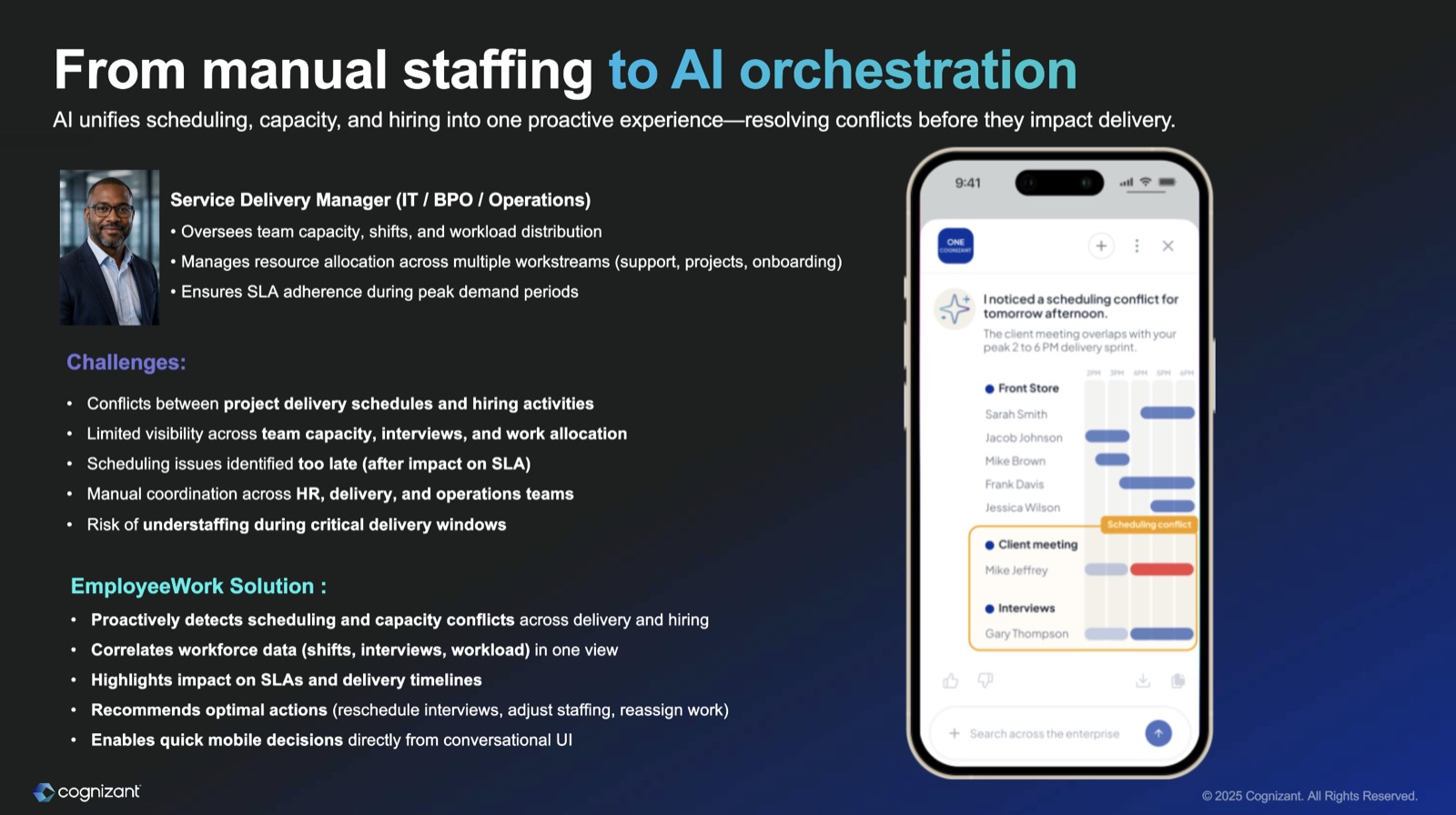
I designed it against real personas pulled from the client base: an IT help desk agent triaging 100+ incidents a day, a service delivery manager juggling shifts and hiring, a people manager drowning in scattered approvals, and an employee who just wants to know if their leave was approved. Each flow moves that person from reactive lookup to proactive, AI-surfaced action.
Case highlight
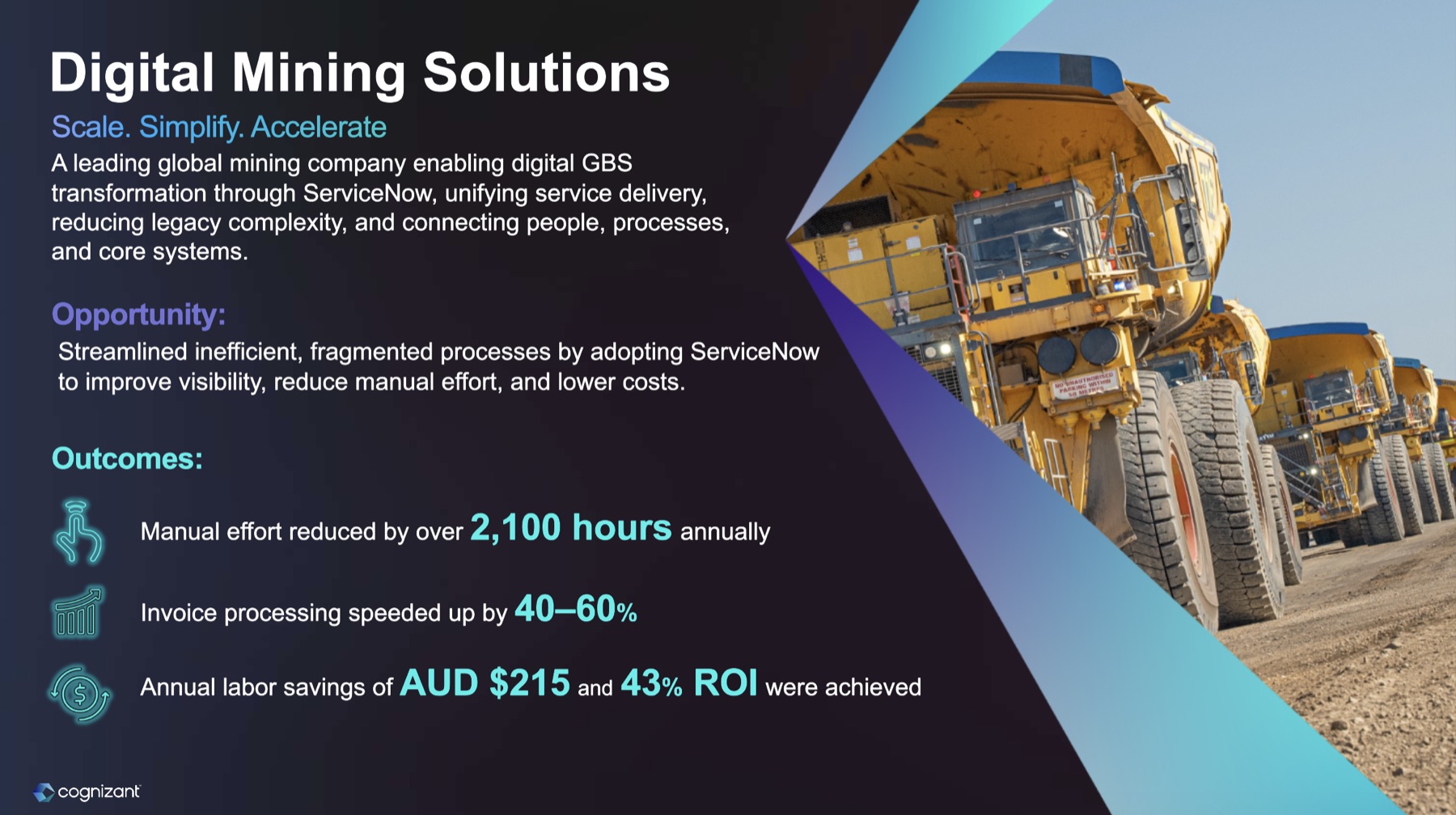
Digital Mining Solutions: scale, simplify, accelerate
For a leading global mining company, the brief was a full digital GBS transformation: unify service delivery, strip out legacy complexity and connect people, processes and core systems through ServiceNow.
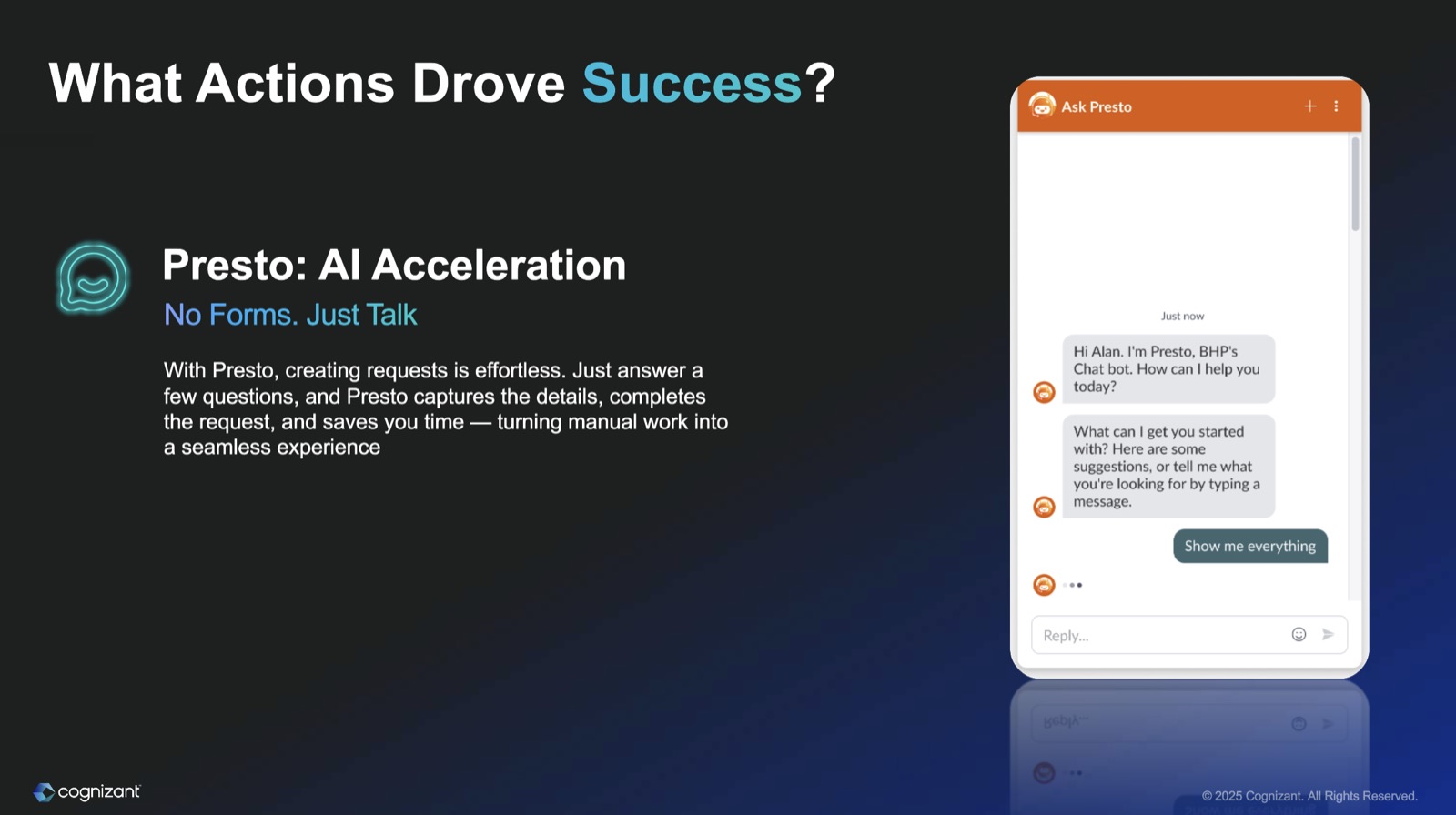
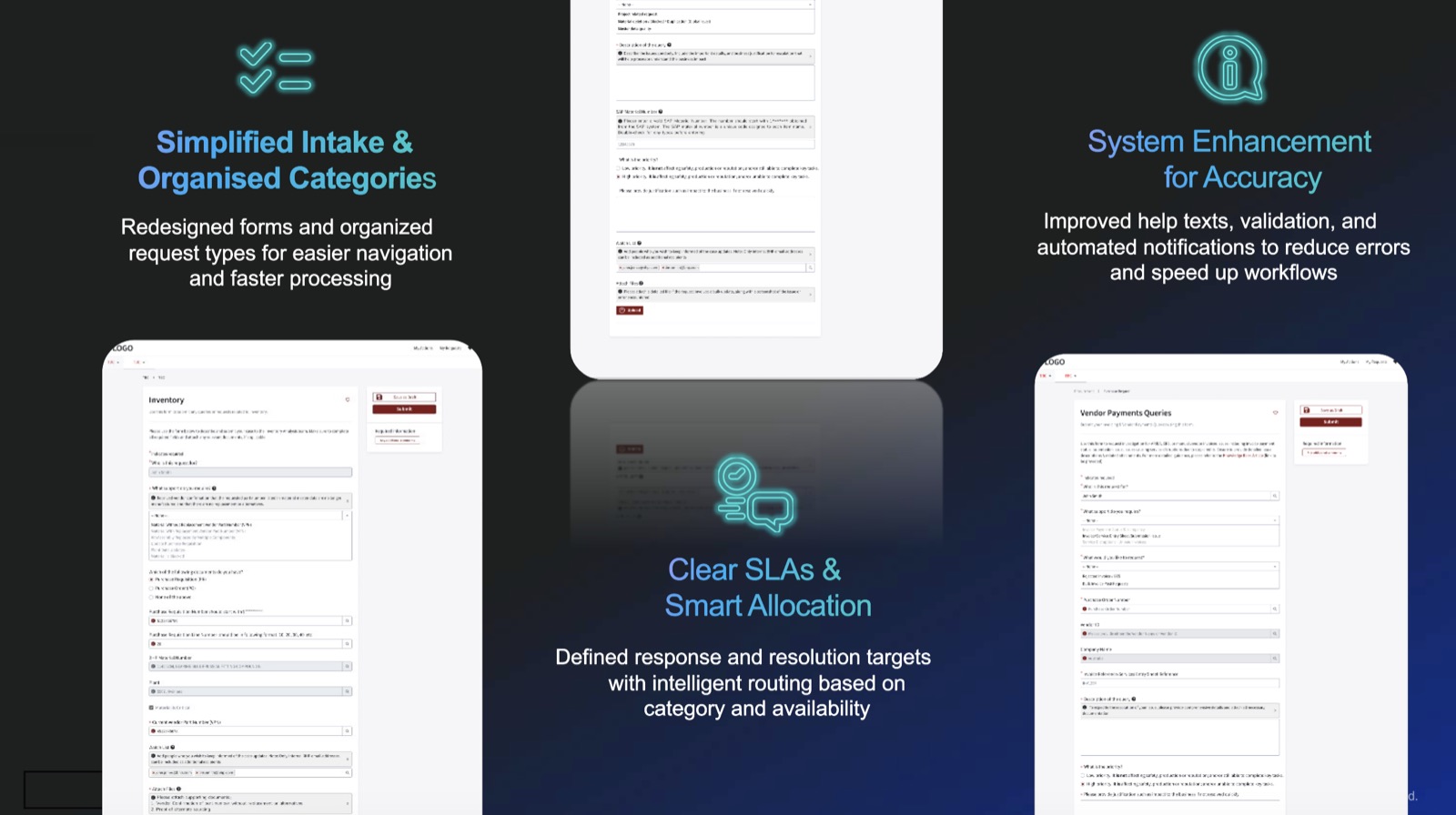
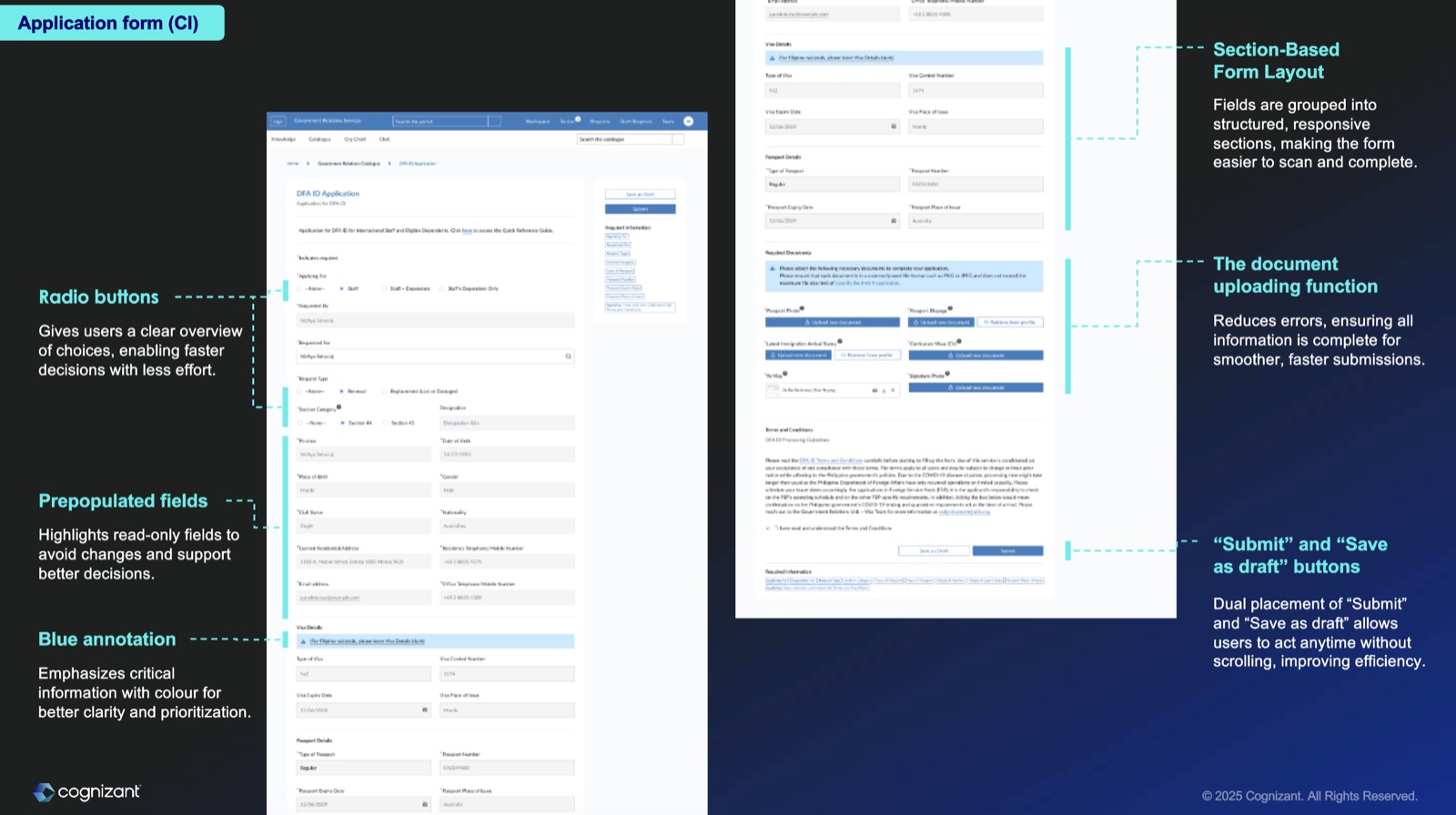
The centrepiece is Presto, a conversational request assistant built on the promise "no forms, just talk." Presto asks a few questions, captures the details and completes the request itself, replacing the manual form-filling that used to sit between a worker and a resolved ticket. Around it, I redesigned intake forms into simplified, organised categories, added clear SLAs with intelligent routing, and tightened validation and notifications to cut errors before they happen.
Context
Seven industries, one platform
At Cognizant I design ServiceNow experiences for enterprise clients across APAC: a global mining company, Australia's largest supplier of home and office products, a leading primary care provider, an energy business, a not-for-profit superannuation fund with 130,000+ members, a global electronics company and a government conservation agency in New Zealand.
Each client arrives with the same tension: fragmented legacy systems, separate IT and HR sites, low engagement and a dated interface. Each needs a portal that feels like their brand, works for their people and still upgrades cleanly with the platform.
The craft
Designing inside platform guardrails
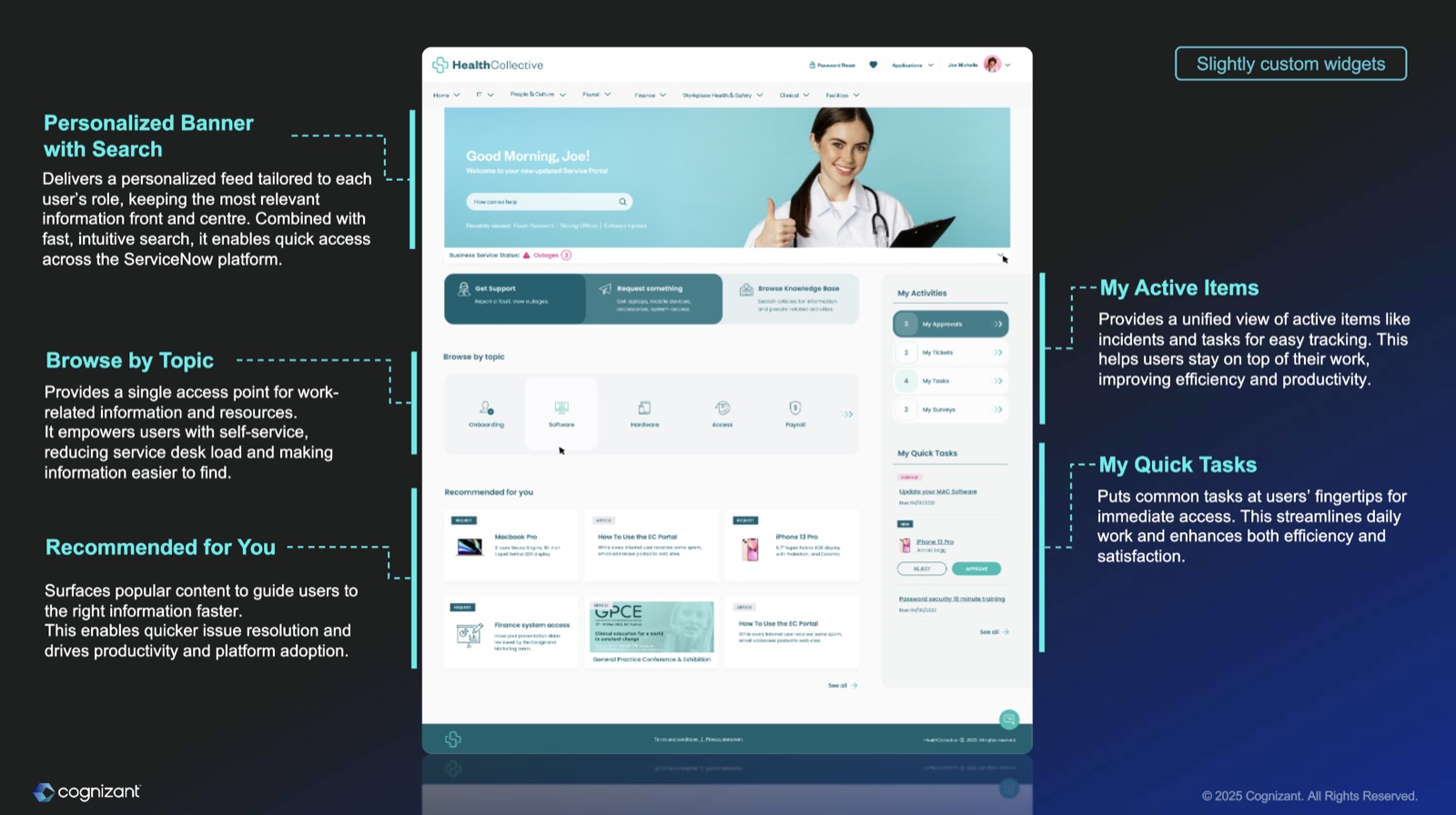
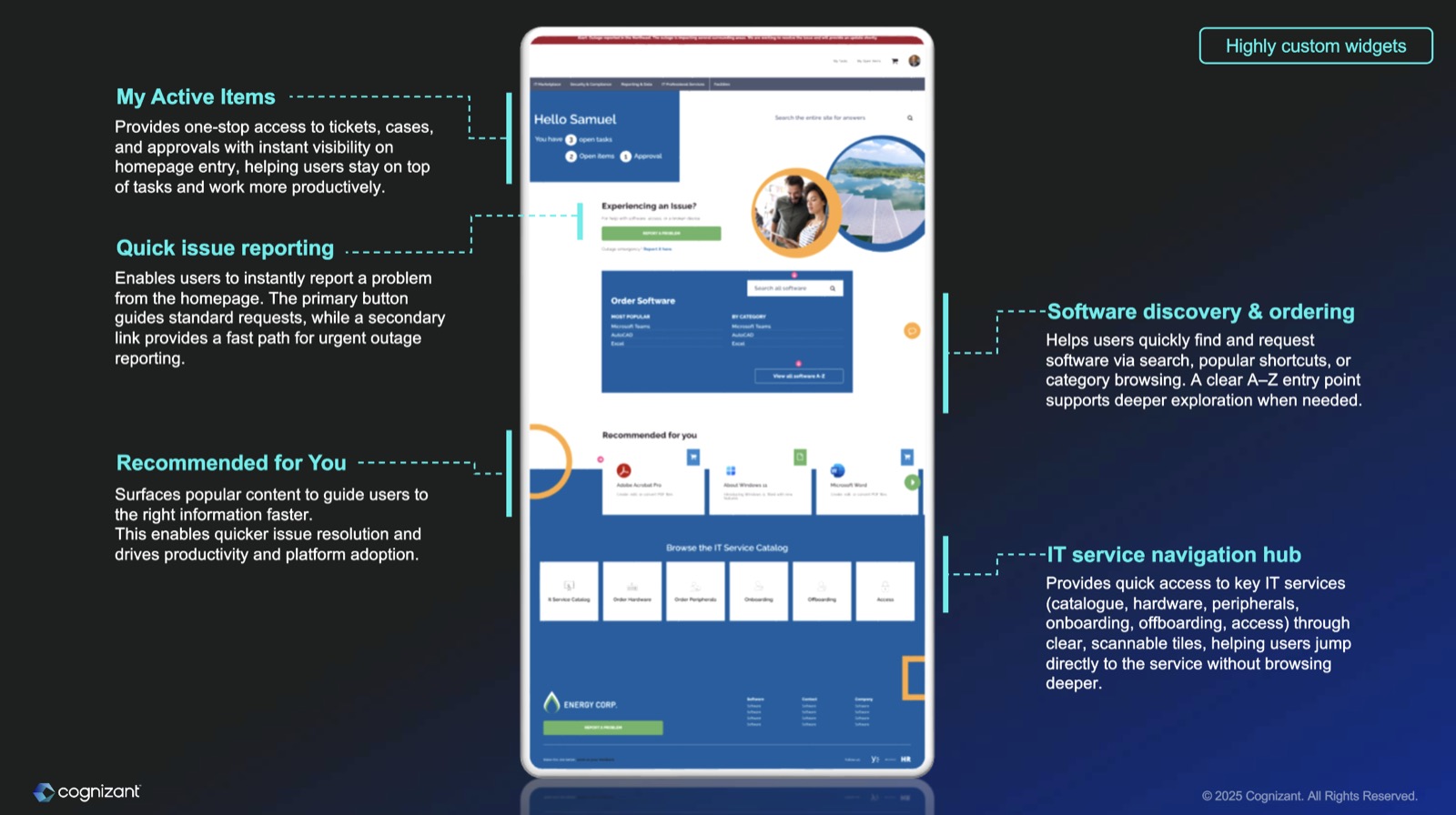
ServiceNow rewards restraint: every custom widget adds cost and upgrade risk, while pure out-of-the-box rarely matches how a business actually works. My job is finding the line, and most of the work ships as "slightly custom widgets": platform components, carefully themed and extended only where the user journey demands it.
- Workshops before wireframes. Aligning IT, operations and business stakeholders on priorities and design direction early.
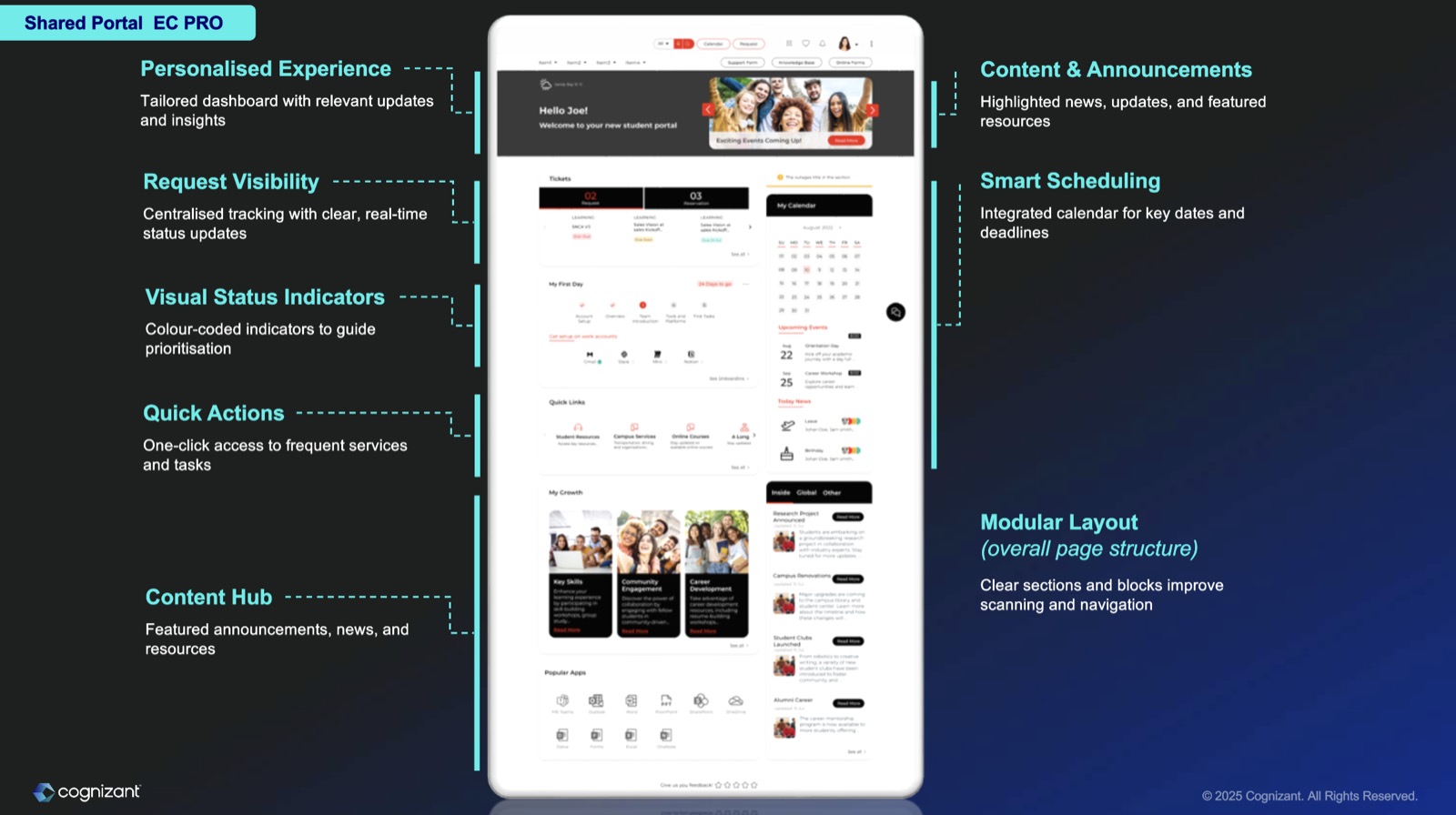
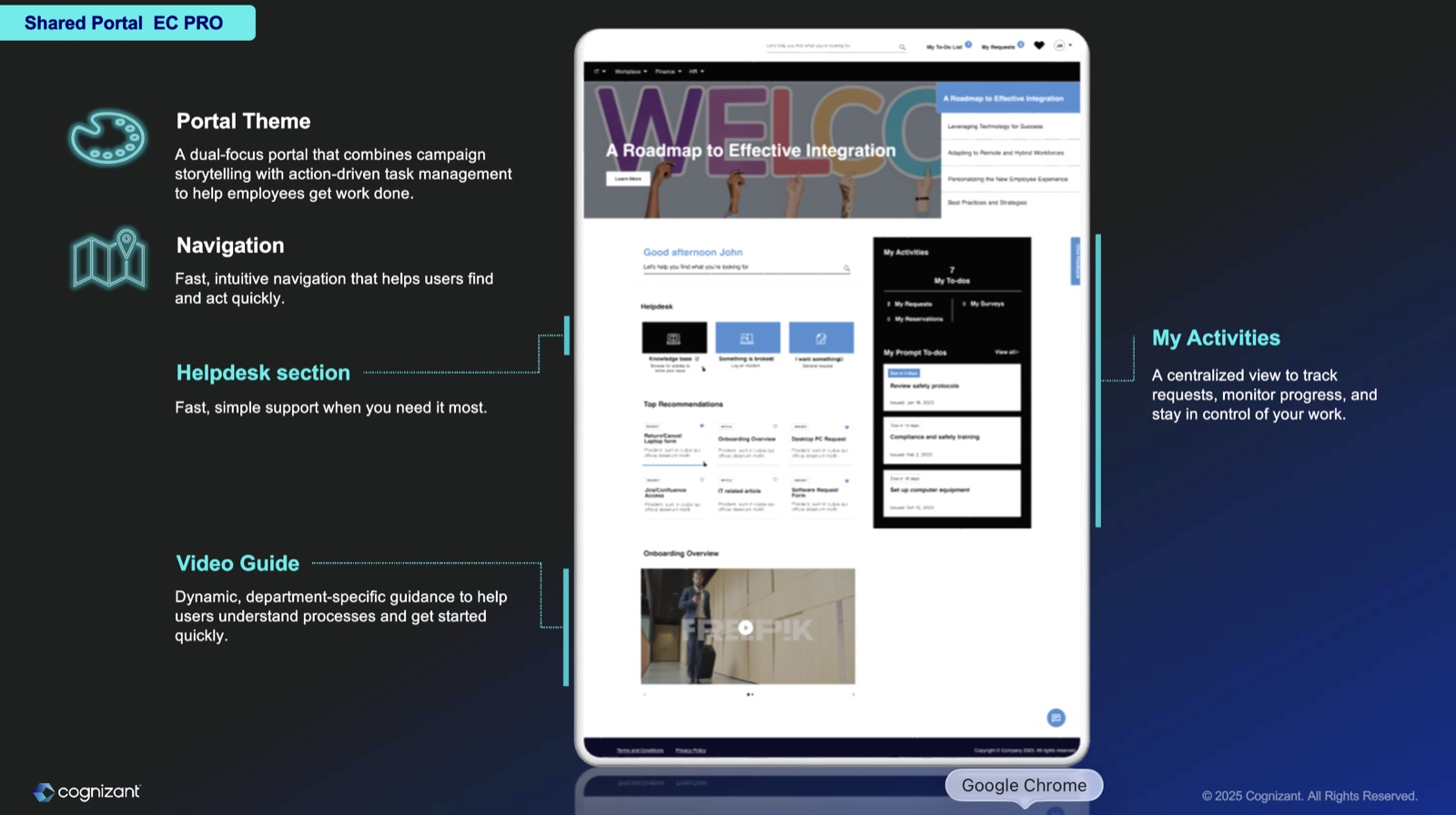
- Portal themes. Intuitive, action-focused design using each customer's branding and user familiarity.
- Details that compound. Emergency support paths moved to the footer so users reach help faster from any page; status widgets that surface outages before tickets are raised.
- Accessibility as a baseline. WCAG 2.1 AA is a requirement in every engagement, not a nice-to-have.
Selected engagements
From mine sites to national parks
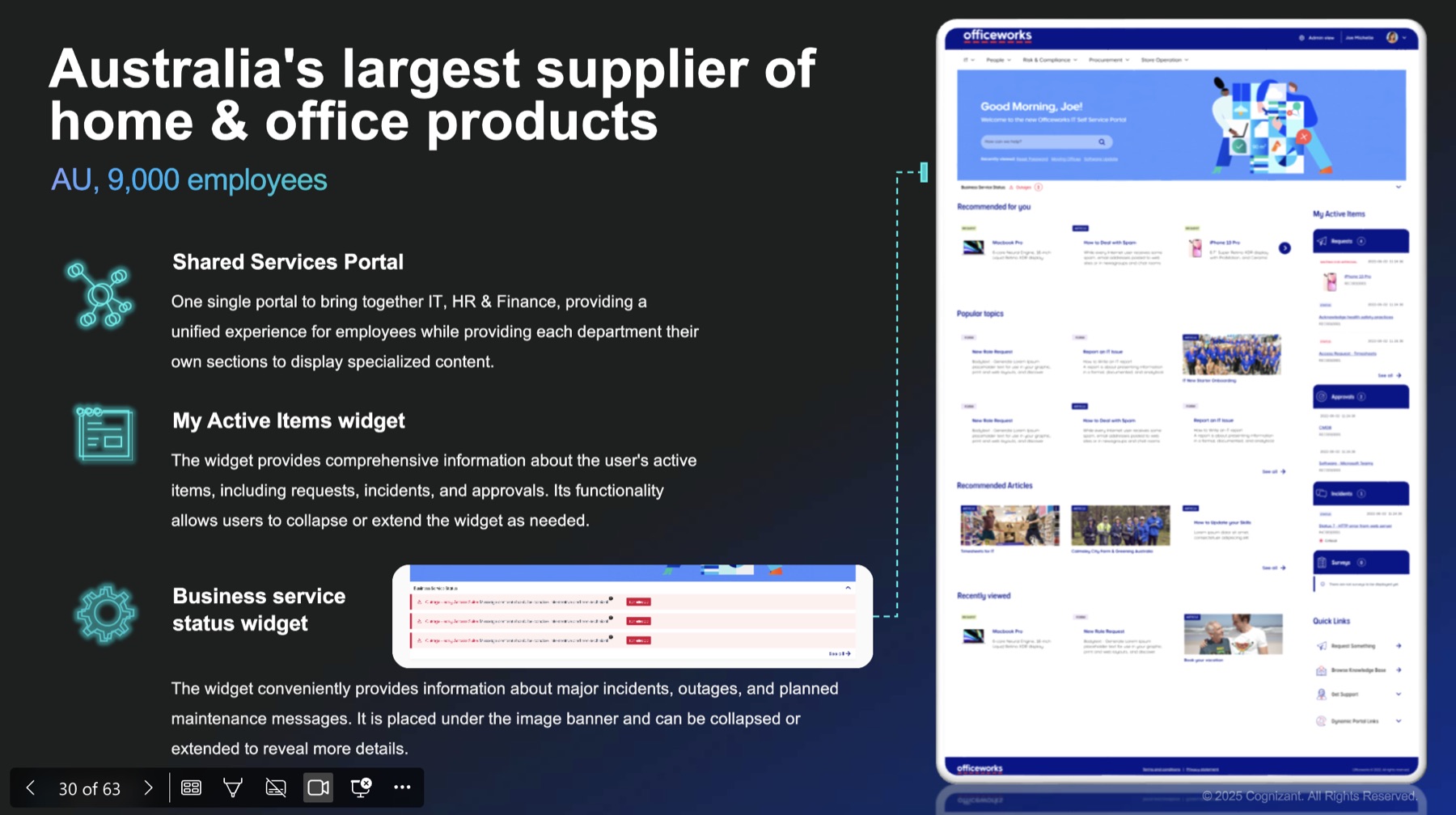
Retail. For Australia's largest supplier of home and office products (9,000 employees), a shared services portal bringing IT, HR and Finance into one experience, with specialised sections per department, an active-items widget and a business service status feed.
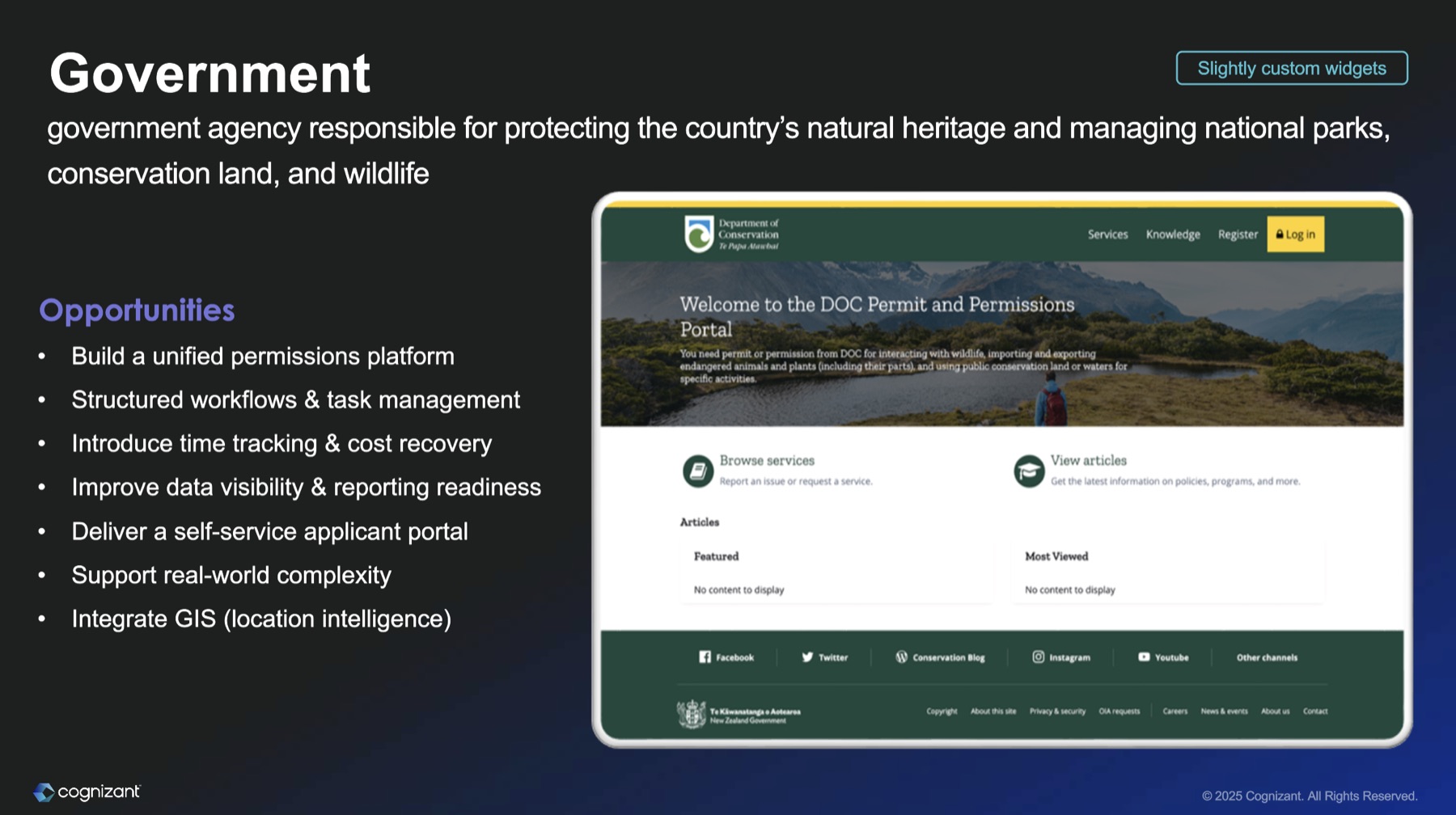
Government. For New Zealand's Department of Conservation, a citizen-facing permit and permissions portal: structured workflows, a self-service applicant experience and GIS location intelligence, built to handle real-world complexity.
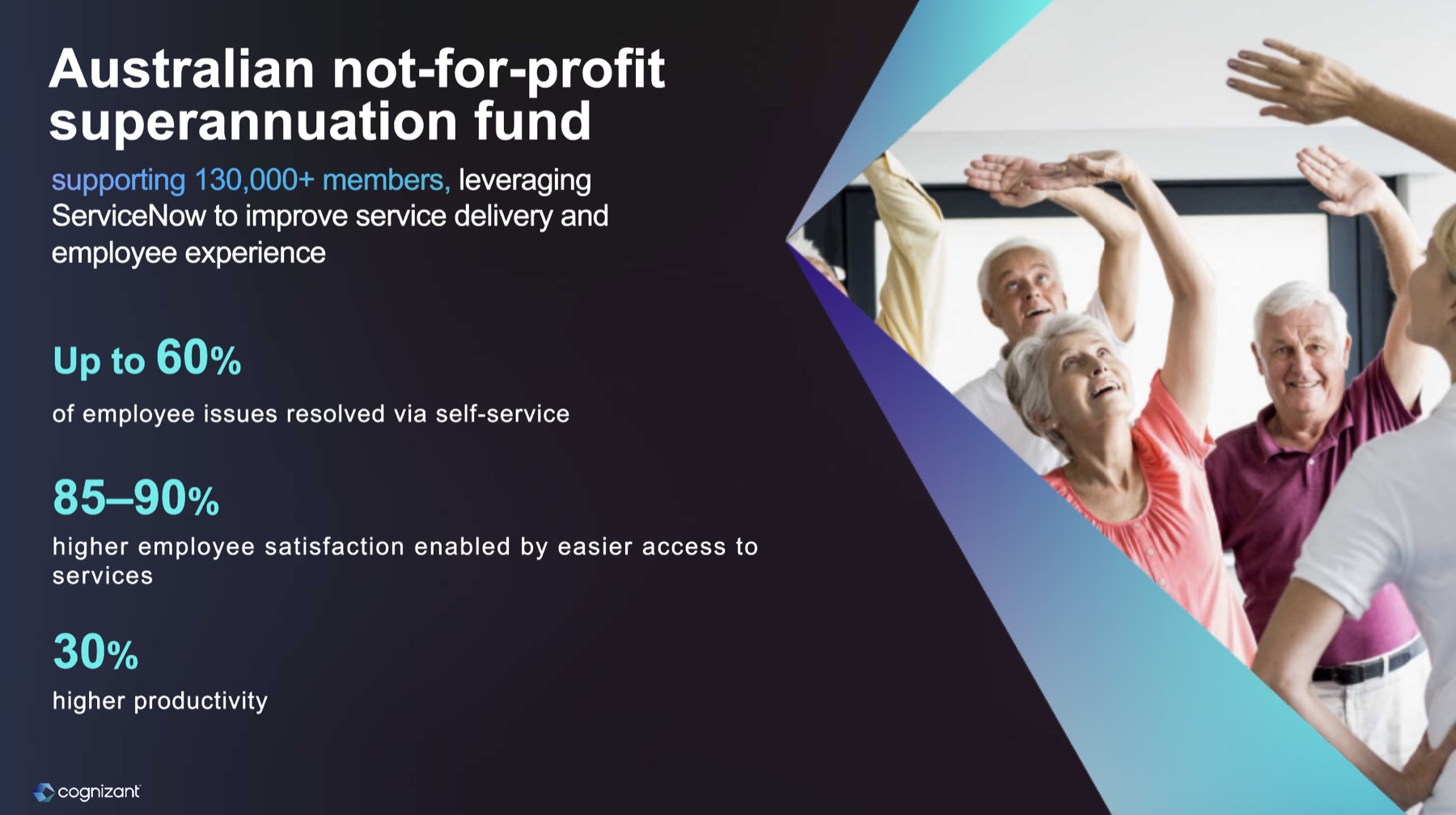
Finance. For a not-for-profit superannuation fund supporting 130,000+ members, an employee experience that moved the majority of routine issues to self-service.
Screens and figures are from Cognizant case materials; client identities are anonymised where required.
Impact